Arrenberg by the Numbers
What works here works everywhere.
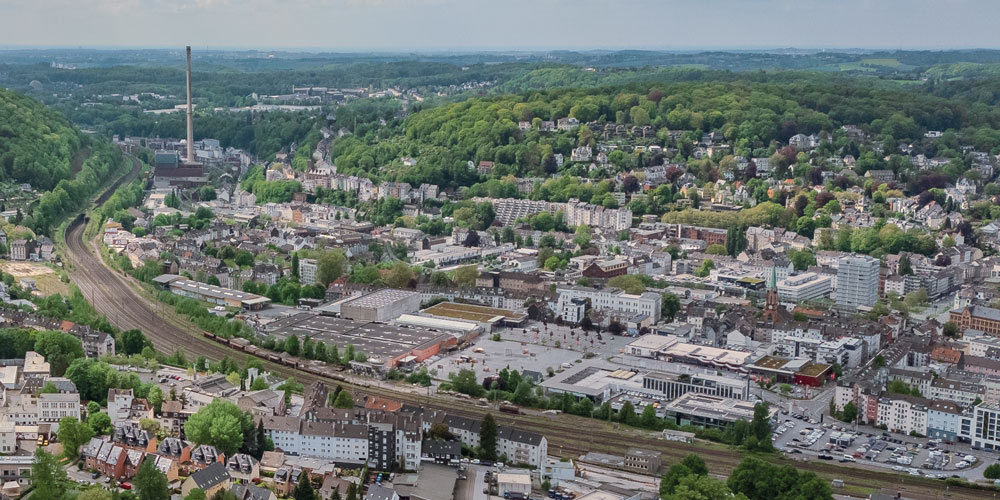
Arrenberg is a diverse neighborhood in western Wuppertal, located right on the river. Covering an area of 86 ha, it is home to 5,500 residents, including just under 1,000 children and adolescents, spread across approximately 3,000 households; half of the residents live alone. The neighborhood is rich in historic buildings; 70 percent of the structures are over 100 years old. A quarter of the residents have lived here for over 30 years. The proportion of people with a migration background—more than 3,300 individuals—exceeds 60 percent. In 2024, the proportion of people receiving basic social assistance stood at 20 percent.
The neighborhood has served as a real-world laboratory for scientific studies on multiple occasions. As a result, it has close ties with the Wuppertal Institute, the Jülich Research Center, the Collaborating Center on Sustainable Consumption and Production (CSCP), the University of Bergisch, and other universities.
The Situation
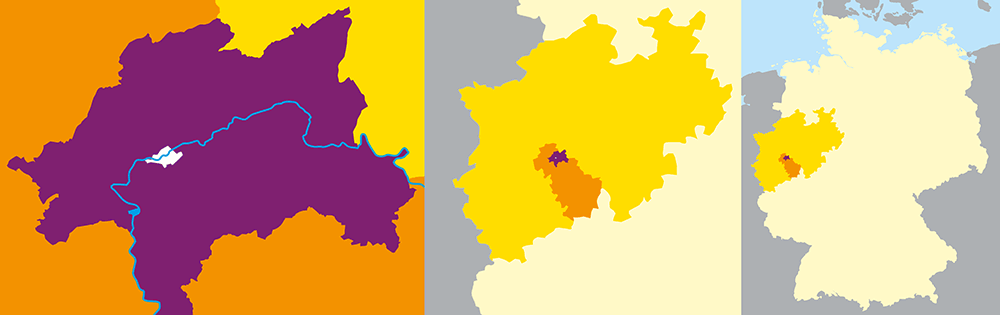
The Arrenberg neighborhood (white) is located in the heart of Wuppertal (purple), the capital of the Bergisches Land (orange) in North Rhine-Westphalia (yellow). Situated on the banks of the Wupper River, the neighborhood rises about 50 meters in elevation, extending north toward the Nützenberg and south toward the Kiesberg.
Neighborhood Boundaries
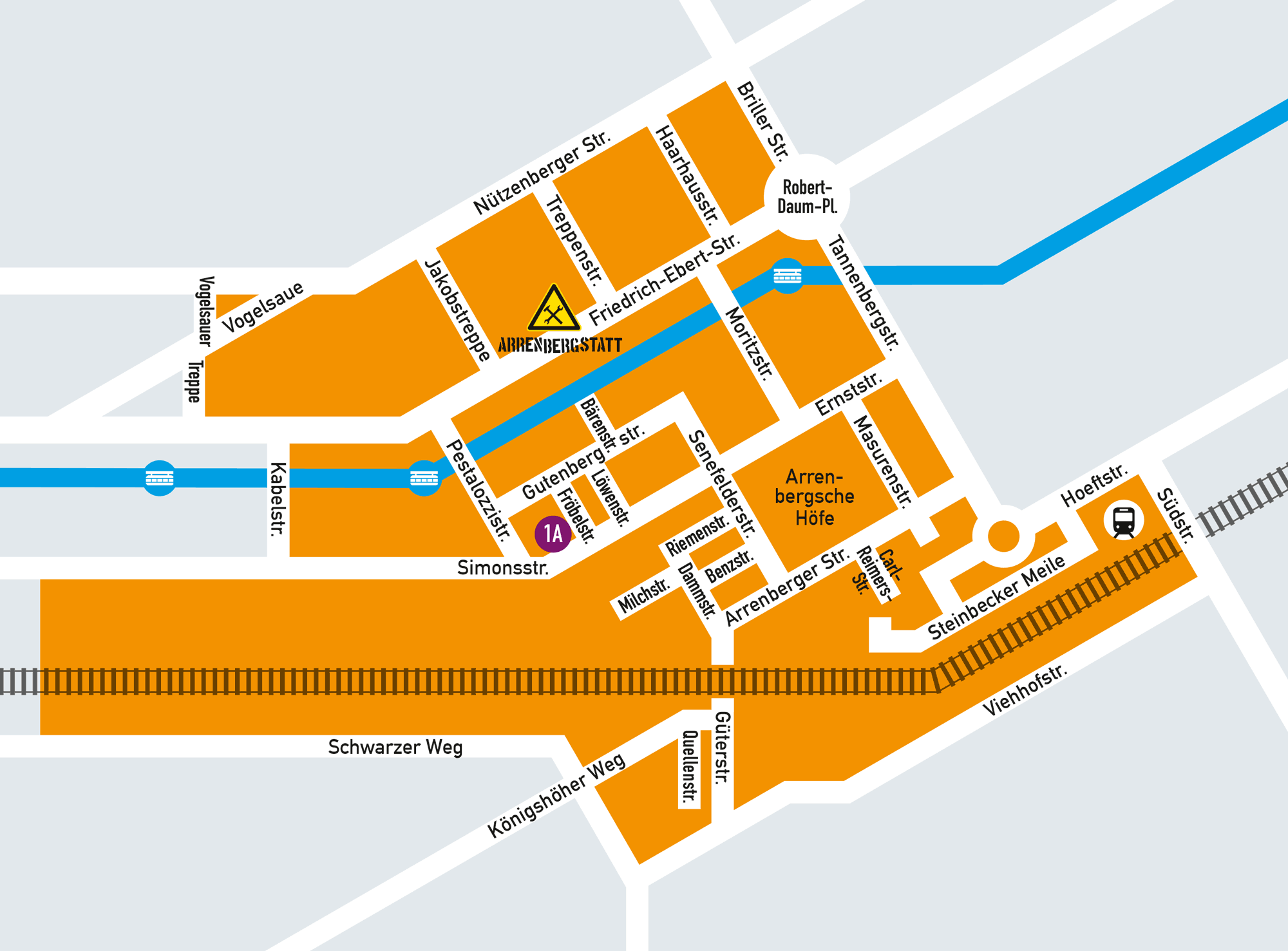
To the north, the Arrenberg, along with Nützenberger Straße, borders the neighboring Brill district; to the east of Tannenbergstraße, Elberfeld-Mitte and Südstadt begin; to the south, Viehof Street separates our neighborhood from the Friedrichsberg district, and to the east, the railroad tracks, Kabelstraße, and the Vogelsauer Treppe form the border with Nützenberg.
So much for the official urban zoning. In everyday life, we don’t take it quite so literally, but rather follow the Cologne way of thinking: Arrenberg—that’s a feeling!
Public Transportation Access
The suspended monorail has two stops in the neighborhood: Pestalozzi-Straße in the west and Robert-Daum-Platz in the east.
The central B7 valley axis, which cuts through our neighborhood as Friedrich-Ebert-Straße (98–191), is served by six bus lines that stop at two stations: Treppenstraße and Pestalozzi-Straße.
And with the Steinbeck station, the neighborhood is home to a historic train station (built in 1841).
Political Orientation
2025 Local Elections
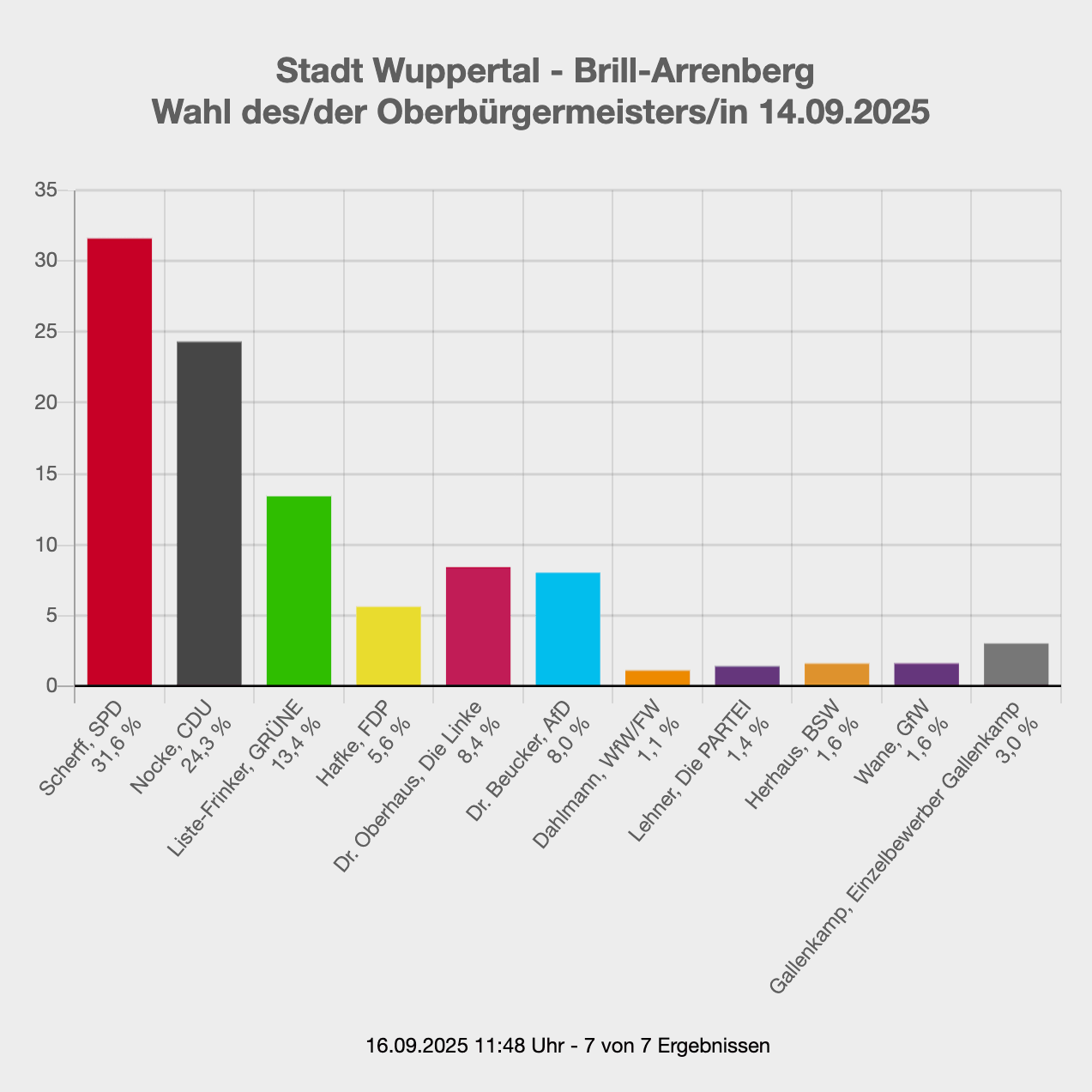
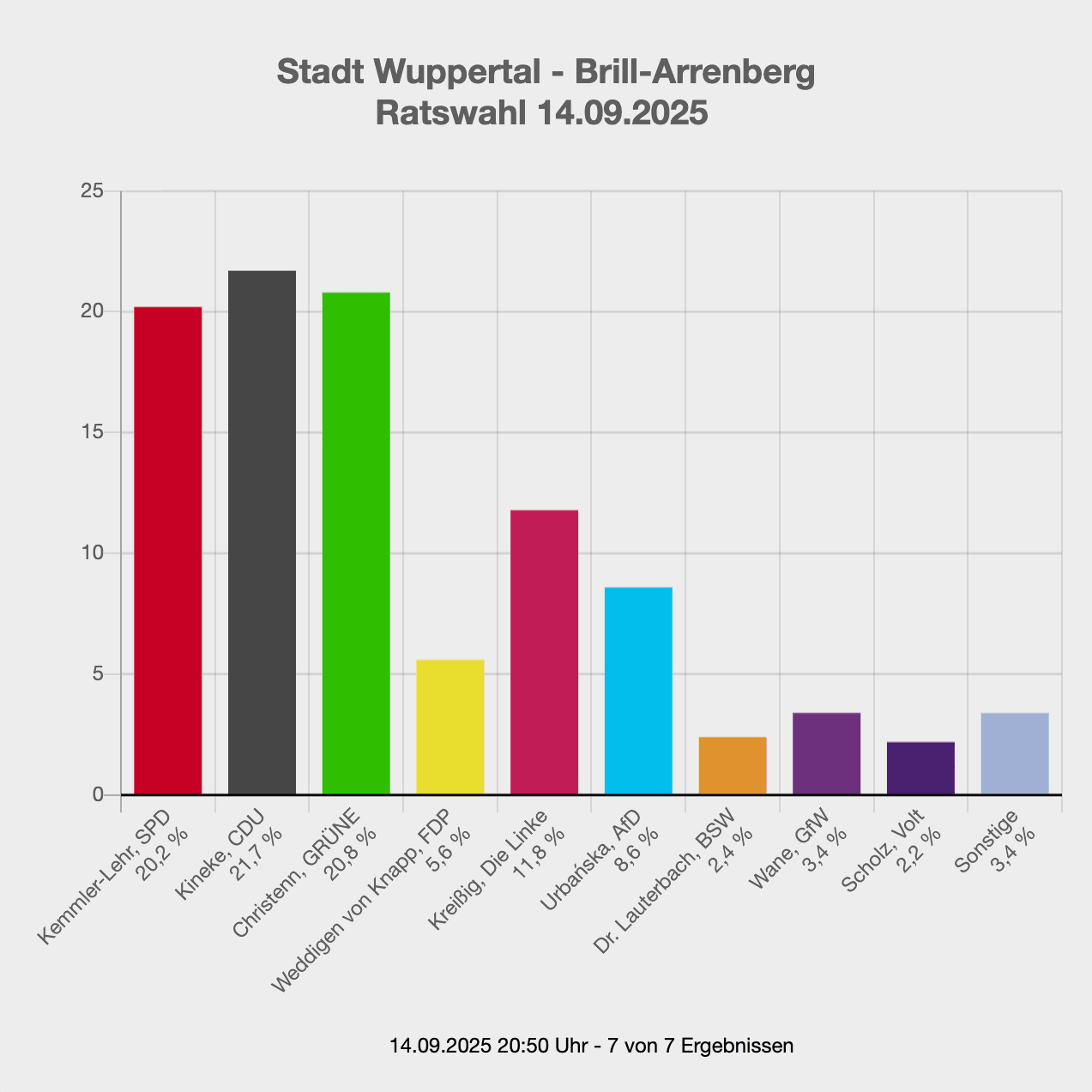
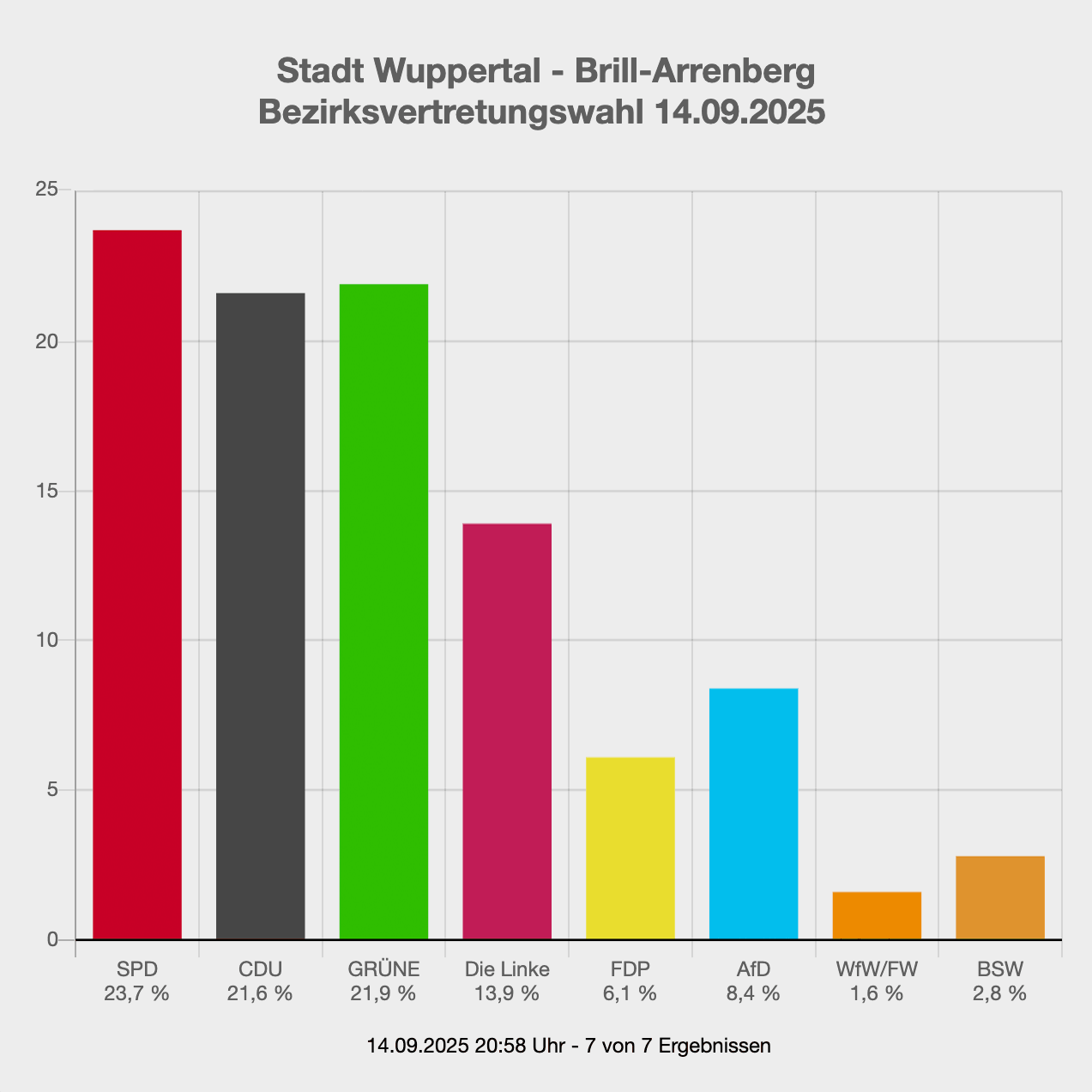
Voter turnout in the electoral district was 58.2 percent.
Sources: Statistics from the City of Wuppertal, https://wahlen.wuppertal.de


Please log in to leave a comment.